Thursday, 16 August 2012

LinkedIn Users Loving Twitter Breakup


More than three out of five LinkedIn users (61 per cent) say their experience of the business networking service is now “better” or “much better” since their connections’ Twitter updates were removed from their live stream. The poll, carried out by Parker Wayne & Kent Public Relations, also shows that younger LinkedIn users were more likely to be in favour of the change. 

In June 2012, Twitter announced that tweets would no longer sync with LinkedIn streams, severing the two and a half year partnership between the companies. Ryan Roslansky, Head of Content Products at LinkedIn, said the split stemmed from Twitter’s “evolving platform efforts”, suggesting a push in efforts by the micro-blog giant to channel consumers back to its own site.

According to Michael Sippey, Product Team Director at Twitter, some of Twitter’s new features, such as expandable tweets, were not visible on LinkedIn. He noted in a company blog post that “[users] need to be able to see expanded Tweets and other features that make Twitter more engaging and easier to use. These are the features that make Twitter Twitter.”

Whilst many may have expected this backtracking move to be met with objection by social media users, poll responses suggest otherwise. Of the 300 voters who participated in the poll on LinkedIn, just 11 per cent of voters feel that it has become “worse” or “much worse” while 28 per cent maintain that their experience of the site remains unchanged by the split.

Many assume that younger people are the most hungry for social media updates from every platform, yet the results of the poll prove that those in a younger age bracket appreciate the split most. Of the voters whose birthday is logged with LinkedIn, users in the 18-36 year old bracket showed a significant tendency to say that their experience has been improved.

When the partnership between the two social media sites began in 2009, the syncing of streams was set to boost the number of younger users on LinkedIn. In return, Twitter was to gain increased exposure to LinkedIn’s fast-expanding user base. The sync appealed to users as it allowed CEOs and employees on LinkedIn networks to provide real-time updates to their connections.

However, the poll revealed that the general sentiment once tweet updates were removed was one of relief. Participants said that having LinkedIn activity streams filled with tweets became a nuisance. Where many Twitter users may update every hour or so, LinkedIn users might only update their statuses once a week. The result was that carefully put together LinkedIn updates were swamped by a mass of tweets. One user commented, “The tweets on LinkedIn were akin to spam mail, rarely having anything to do with professional networking”. Another user commented “it is too bad that this feature was abused by so many”, whilst one referred to the tweets on LinkedIn as “pointless rambling”.

Senior Public Relations professional at Parker, Wayne & Kent, Richard Bell, said “If social media sites are going to collaborate successfully, there needs to be a way to filter what is relevant for the different sites and for the different users. Syncing updates across all social networks makes the content untargeted to each networks’ communities and users’ various groups of connections. The time-poor business community wants focused content with a personality on LinkedIn; Facebook users want deeper personal information from people they’ve met; Twitter users want information, recommendations and short comment from strangers as well as friends.”

It is still possible for LinkedIn updates to broadcast to Twitter. When posting a status on LinkedIn, clicking the ‘Share on Twitter’ button beneath the text box will permit the status to appear on Twitter feeds.
The results of the poll here. 

News you might have missed during the Olympics


One message pervaded the British media over the first 2 weeks of August 2012 - with a particular emphasis during the 6th - 12th August. The London Organising Committee of the Olympic's “inspire a generation” message was unmissable, dutifully mentioned in a mass of media articles - whether news or feature; print, broadcast or online - and expressed by presenters, interviewers and journalists as well as interviewees. It was a veritable cut-and-paste of key messages during a largely manufactured public euphoria surrounding the Olympics TV event. The last time a phrase was so eagerly taken up by the media was probably in 2001 - when a war was declared on an abstract concept - has media coverage been so on-message. “The War on Terror” message was adopted by the media as much as it was proffered by politicians. 

The dominant PR actor during August has been the Olympics and Team GB. In terms of actual content consumed, BBC Sports reported the highest viewing figures in the history of the UK for the Olympics; 51.9 million UK viewers saw at least 15 minutes of the Games – equivalent to 90 per cent of the UK population. Such content generation provided an unrivaled vehicle for key message delivery. Excellent media training of the Team GB athletes ensured that the key message was at the core of every interview.

The media committed a vast amount of space and air time to the Olympics, but for most other PR actors - whether businesses, not for profits or even governments - it's been difficult or impossible to attract journalists’ attention with news that’s not centred around running, jumping, throwing or rowing. 

Now that the Games are out of the way though, journalists suddenly have a lot of spare pages and airtime to fill, and are hungry for news. Understanding the media agenda is crucial to securing coverage, and a vital element of PR planning. Big events like the Olympics are bound to dominate the media agenda and so block opportunities for editorial coverage of other PR actors. Organisations that have planned well avoided conducting any PR activity over the period. However, the world hasn’t stopped. Big events and noteworthy news were taking place  over the last few weeks. Here’s just a selection of things you might have missed:
  • Kofi Annan resigns as special UN envoy to Syria – Kofi Annan, the former Secretary-General of the United Nations resigned his position as special envoy to Syria during the first week of the Games. The author of the UN’s six point peace plan for Syria blamed his resignation on “finger-pointing and name-calling in the Security Council” in a letter to the Financial Times. Annan closed his letter by asking “is ours an international community that will act in defence of the most vulnerable of our world, and make the necessary sacrifices to help?"
  • NASA lands mobile laboratory Curiosity on Mars – NASA succeeded in shooting Curiosity – a roving, robotic, self-contained laboratory on wheels that is roughly the size of a Mini Cooper – to Earth’s nearest planetary neighbour. The craft travelled a distance of 570 million kilometres and successfully landed in a circle approximately 20 kilometres wide. This is a distance that would take Usain Bolt – the fastest man who has ever lived – 1,459 years to travel, even at his top speed of 44.72km/h. Curiosity was sent to Mars to analyse the planet’s geology in an attempt to ascertain whether it could have once supported life. It’s nuclear powered, on Twitter and has posted several images from the surface of Mars. Yet it secured only one line on the BBC News front page, and the touchdown in the red sand of Mars was several pages behind Greg “Ginger Wizard” Rutherford’s arrival in the long-jump sand.
  • UN Global Arms Conference dissolved – On the day of the Opening Ceremony, watched by 900 million people worldwide, a UN Global Arms Conference was quietly shelved without resolution. The conference had hoped to hammer out a treaty to prevent the sale of weapons to nations under arms embargoes, or to those who would use them to “promote acts of genocide, crimes against humanity or war crimes.” The treaty has been supported by humanitarian charities including Amnesty International and Oxfam. However, the US, Russia, China, Cuba, Venezuela and the Democratic People’s Republic of Korea all asked for more time to deliberate, and it is unlikely that discussions will continue until after the US elections in November. This means that, according to Oxfam, it is still easier export AK-47s than bananas.
  • Rebekah Brooks and six former News International staff charged over phone hacking – Former News International Chief Executive Rebekah Brooks was formally charged with phone hacking (following the CPS's statement of intent weeks before) and importantly had court dates set. Brooks faces up to two years in prison alongside David Cameron’s former spin doctor Andy Coulson and five other former News of the World journalists. Brooks is set to appear at Westminster Magistrates’ Court in September 2012, while the other seven accused will be heard earlier, at the same court, in August 2012.
  • French Central Bank predicts slide into recession – France’s central bank (Banque de France) said it expected the country’s GDP to fall 0.1 per cent in the third quarter of 2012.  This marks the first time the country has officially been in recession since spring 2009.While this news compounds the ignominy of being roundly beaten in the medal tables by Team GB athletes, the UK itself was not immune. The economy continued to suffer as the Bank of England cut its growth prediction to near zero. However, in the wake of the overwhelming wave of optimism and positivity that swept the country over the Olympic period, this gloomy economic prediction was widely ignored.
  • Rory McIlroy sweeps US PGA as Tiger lags – In our opinion, sports reporting isn't really news, but a record breaking is. Far from the madding crowds of the Olympics, golfer Rory McIlroy was quietly reclaiming his title as world number one. McIlroy, from Holywood in Northern Ireland, won the US PGA by a record-breaking eight shots – one more than previous record holder, Jack Nicklaus, set in 1980. Despite the fact that golf, along with rugby sevens, will be in Rio’s 2016 Olympics, coverage of one of the world’s biggest golf tournaments was pushed from both front and back pages by the Games.
  • Magic Mike mix-up – A children’s entertainer from Scarborough, stage name Magic Mike, has discovered the hard way that all publicity is not necessarily good publicity. Following the UK release of Steven Soderburgh film Magic Mike, which features Channing Tatum as the titular character – a male stripper. The entertainer – real name Michael DeFreitas – has been receiving inquiries from confused punters seeking “adult entertainment.” Mr DeFreitas has expressed his bemusement and worries about the mix up, stressing that he has never taken a stitch off but is now unsure whether his audience will feature “screaming women or screaming kids.”
Nobody reads the papers for the adverts. They read it for the content – the news, the features, the interviews. But for the first two weeks of August in 2012, almost all of coverage in the UK was Olympic Games related.

While media dominating events can be planned for, circumstances can occasionally conspire to create a media storm that drowns out everything else. On 11th September, 2001, only one thing was on the media agenda, and no product, release or event could hope to secure coverage for several weeks.

Some things are impossible to plan for, but events like the Olympics shouldn’t come as a surprise to anyone planning a PR campaign. With careful planning, companies can avoid conducting PR activity during big, scheduled events such as the Olympics that are likely to dominate the media agenda. Instead, they should use the downtime to develop collateral and to schedule media relations activity for a more opportune moment. Ideally just before the media dominating event is over. The quicker off the mark you are to fill the resultant news deficit, the more likely you are to achieve coverage. 

Wednesday, 1 August 2012

Picture Perfect Data


They’re eye-catching, they’re informative and they’re easy to absorb. From maps depicting literacy rates across the world, to graphical comparisons of Starbucks coffee and McDonalds, successful infographics have permeated all aspects of contemporary media. They are concise, aesthetically appealing images which convey otherwise-daunting information in a way which is clear and accessible for the reader. But the key word here is ‘successful’. An attention-grabbing infographic is a valuable PR asset that enhances media coverage. Yet one which is too light on visual appeal or too heavy on information will fast lose readers and consequently, interest in your brand’s messages.

Infographics are not a recent invention. Although advances in technology have allowed them to modernise, infographics have held a staple role in media communication for hundreds of years. The weather map began as a chart depicting anticyclone patterns in the middle of the 19th century. It has evolved into the finely tailored, animated infographic that we see on a daily basis on television. When presented online, the weather map is often interactive.   


Monday, 2 July 2012

The Heroes of Marketing Week Live


The Parker Wayne & Kent team giving a presentation on heroic public relations on the main stage at MarketingWeek Live.


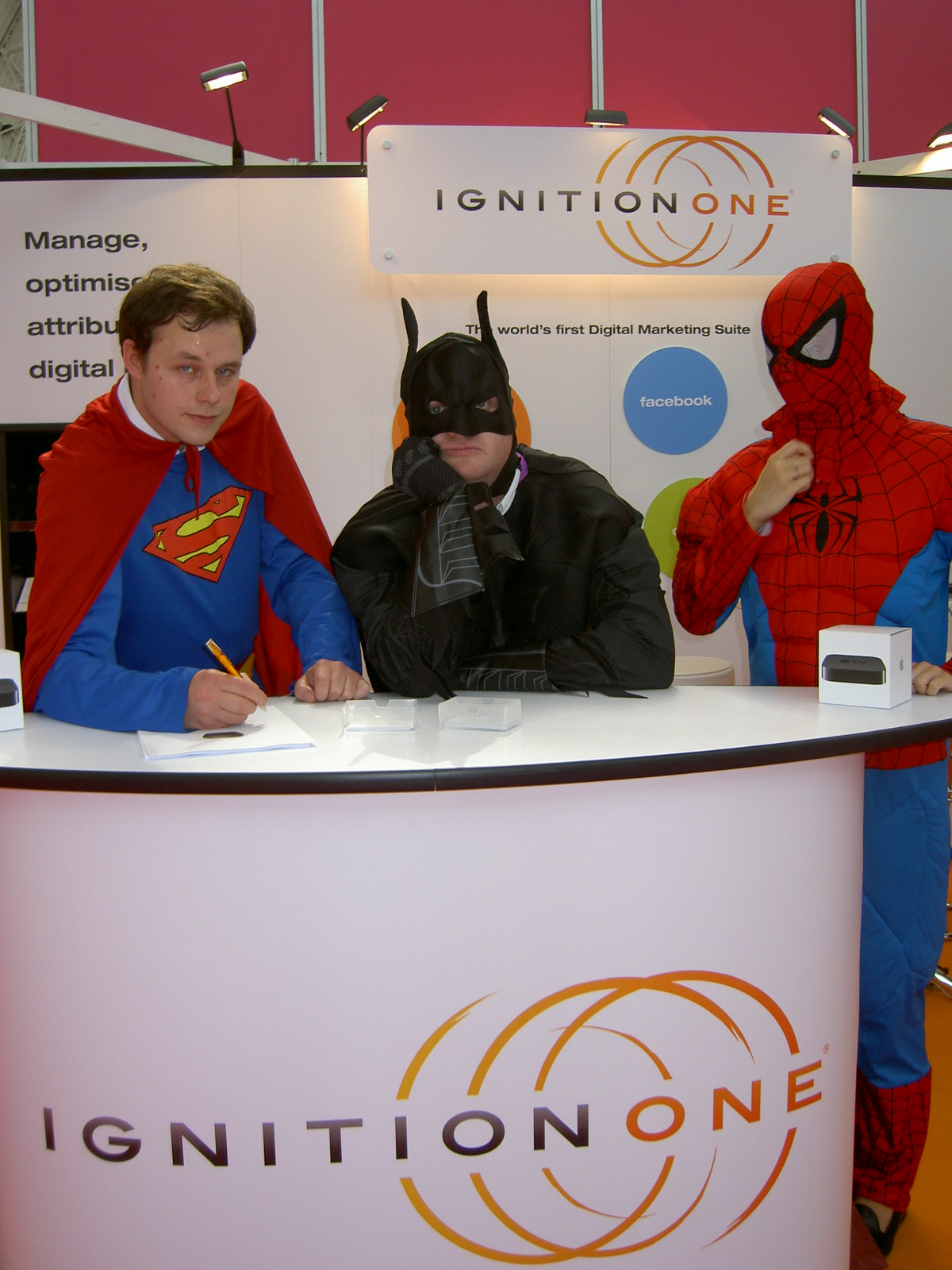
Evil forces infiltrated Marketing Week Live and kept the Centaur staff imprisoned behind a Phantom Zone of glass. Parker Wayne & Kent got there just in the knick of time to save the day.

We got down to work with Ignition One who are global leaders in digital marketing solutions, which enable companies to integrate and centralise cross-channel marketing efforts within one platform.

The Apteco Fast Stats team welcomed us on to their stall to tell us about how passionately they feel about developing marketing data analysis and campaign automation software, enabling marketers to gain insight from their data.


 We met Digital & Wise; who are a leading digital agency specialising in creative online marketing.


We value creativity at PWKPR, so we went over to see Fusing Creativity who specialise in strategic marketing that inspires, challenges and cares about developing business.

 Parker Wayne & Kent dropped by the Chartered Institute of Public Relations clinic to do their bit and lend a hand.

We met the guys over at Neolane who told us about how they provide coversational marketing technology that empowers organisations to build and sustain one-to-one dialogues with their customers. Neolane's customers must remember: with great power comes great responsibility.


You could say that Batman looks 'angelic' over at the Agillic pitch. These guys provide marketing software that lets you trigger personalised communications across any digital channel.


We stopped by for a parlez-vous with French company Canalchat Grandialogue. They organise  interactive web events for international companies.


We were full of beans to meet The Beans Group on our travels, who own two of the UK's most popular youth websites studentbeans.com and graduate site morebean.com. They help brands connect with 18-24 year olds.


 Parker Wayne & Kent took a long hard look at Steely Eye in the eye. We were victorious in the staring competition, and  won a briefing from the design and development team's position as a production powerhouse for some of London's leading agencies.
We met Grass Roots ProjectLink who offer a range of services from project management to participant customer care for rewards schemes.
We raced over to the Eden Red team who gave us a speedy run down of their range retailers and redemption options.


Spiderman got thirsty, so felt he deserved a little reward of his own. The beer was certainly an incentive and motivation to stop at the Corporate Rewards stand - who provide incentive and motivation programmes.

The heroes cleaned themselves up for a meeting with the Software Bureau team who specialise in data processing and address cleansing software. 

Here we are with DLG: they provide of consumer lifestyle data for both solus and integrated multi channel direct marketing.

The hero's descended on Kxen, the company instilled with infinite insight super powers.
We met Infusionsoft who give small businesses a powerful all-in-one sales and marketing automation software. No kryptonite can beat it.
We made friends over at the SDL. They let us know how they enable marketers to understand their customers and engage with them in a relevant manner.


Didn't know Batman was descended from a fruit bat? Here's the proof as he chomps on a pineapple whilst we spoke to DMRI who own, manage and sell quality data and data capture solutions.

Always up for getting down to business, Pro-Active are an innovative marketing company that helps make the most of both online and offline database assets.

We get social with digital and social media experts The Dubs. They told us all about their work with brands, content producers and audiences to deliver commercial results.

Digital agency Glow Labs left us beaming after they told us about how they help their clients develop online opportunities and make the most of their web and media content.

And finally, Her Majesty stopped by the event to commend us for delivering heroic PR to her kingdom...
All in a days work for the PWKPR Team.

Wednesday, 20 June 2012

Who we met at Wireless World


We were at Total Telecom's Wireless World and met Jeremy George, the emerging market mobile industry expert. Jeremy told us about his mobile industry experience, how the phone market differs to other continents, how the mobile industry contributes to African economies, what he thinks of analyst predictions, and outlines the opportunity for investors in Africa.

Tuesday, 19 June 2012

The sin of social media cynicism

The last few weeks have seen social media platforms criticised for their profitability, their privacy and their popularity. These are all important areas of concern for social media marketers – yet the contemporary marketing community responds with ire when anyone questions social media, as if doing so is sacrilegious. But in a JS Mill sense, the industry needs to question social media’s effectiveness to know the truth of its value. Particularly in the current climate, marketers that aren’t approaching these relatively new platforms with an air of cynicism may not be as focused on the return on investment of their activities as they should be. In particular those marketers that are exclusively executing social media campaigns – naturally the greatest proponents of social media marketing –should be the most cynical, as they’re the ones being given the budget. Being cynical is responsible, not reprehensible. So let’s be responsibly sinful, and indulge in some social media cynicism.

We’ll just start with a flag wave: when Twitter takes to TV advertising and running its own events, and LinkedIn exhibits at trade shows – both promoting their advertising services – it says something about social media marketing.

The figures for social media adoption are impressive: the UK alone has more than 30 million Facebook users and 10 million Twitter users. But realistically, this means the best reach UK marketers can hope for through social media marketing is half the British public – compared to the 96 per cent of UK households which have a TV and the 46.7 million British adults who listen to the radio every week. Further, many people have set up social media accounts, but don’t use them.  In October 2011, only a quarter of Twitter accounts were active. Let’s face it, if the stats showed that 75 per cent of people with a TV never watched it, the cost of advertising via that medium would plummet. Add this to another problem with social media marketing – and something that’s actually counter intuitive – there’s effectively a lack of popular content channels compared to the hundreds of popular channels, programmes and sections available on mediums like TV, radio, and online news and print. When you think about it, non-social media represents a greater diversity of ways to influence people. The average number of “friends” a user has on Facebook is only 170 – and these “friends” are often derived from a similar social group to the user, so the user’s Facebook profile actually reflects a uniformity rather than a diversity of influencers. Thus the opportunity to communicate new ideas, products and services can be quite limited.

More cynicism came from CNBC and Associated Press in May 2010 where over-zealous marketers who choose to push all their money into social media advertising were challenged by survey results revealing that nearly six in ten Facebook users (57 per cent) never click on ads or other sponsored content on the site, while another quarter of Facebook users (26 per cent) rarely engage with such commercially generated content on the site. Granted, CNBC and AP have an interest in denigrating the advertising potential of Facebook, so consider their survey with the balanced level cynicism it deserves. Moreover those stats don’t really seem so bad when considering people’s personal opinion of online advertising in general. Most people don’t think that they are influenced by banners, skyscrapers and MPU ad units. But they are. People generally believe they ‘find’ stuff they want to buy on the ‘net. The concept that they have responded to a form of marketing doesn’t seem to enter their minds. They’re just wrong. Even when conducting searches through Google, Bing and Yahoo, it’s the search engine optimisation conducted by a marketer that brings up the product or service that the person decides to buy. What’s more, new ways of targeting people through social networks are delivering ads that are hyper relevant and hyper local to users. Such services are showing that Facebook advertising has to be done in the right way, by the right advertiser to the right user.

Also consider a strange result from a 2012 Chartered Institute of Marketing study that revealed that only 23 per cent of marketers believe that social media marketing can help brands to accrue new customers. The report, which looked at Facebook, Twitter, YouTube and LinkedIn, also found that a third of the 1,500 marketers polled (34.5 per cent) said that their social media activity in 2011 was “not at all effective,” with only one in seven (13.7 per cent) reporting it was “extremely effective.” In spite of this, three quarters of marketers (74.5 per cent) plan to increase investment in the channel in 2012. Hopefully this isn’t a demonstration of irresponsible marketers throwing good budget after bad at the new, “cool” social media channels regardless of the results. It may be that these marketers have played around with social media over the past few years, realized what works and what doesn’t, and are investing in the activities that deliver results. It’s inarguable that the British public is increasingly embracing social media as an essential part of their everyday lifestyle, and social media’s incorporation into traditional media channels’ activities is driving adoption – however marketers must keep the absolute numbers of potential audience in mind.

The attributes of the social media audience must also be considered. Of course the younger generations have been faster to adopt social media – whether out of peer pressure, a carefree attitude to their personal data, a way of feeling popular, or just to keep watch on whether the person they fancied in school is single yet. More than 88 per cent of 18-34 year olds now have social media profiles, so huge amounts of marketers feel they must tap into this market. Yet much of this core target audience have either recently graduated, are out of work or, most importantly, have little money available to spend in the current economic climate.

A much larger problem is that there’s still something of a blind spot around social media. The medium is still very new and, while it’s difficult for marketers to ignore international networks of over 800 million potential customers, social media’s measurement metrics are notoriously woolly. Evaluation is a problem for many traditional marketing disciplines, including public relations, but such issues don’t affect other sections of the online marketing mix. There’re fewer problems discovering the return on investment for straight-up online ad campaigns or email marketing campaigns for example.

In tough economic times marketers need to be able to be held accountable, and need to be able to prove the ROI of any activity. The PR industry has struggled with this very issue, but with the right client or product and the right systems in place, it can be done. The best example is when working for the mobile apps industry. When Parker, Wayne & Kent provides media relations to raise awareness of new mobile apps, as we did for Skycom’s 0800 Wizard, we’ve seen app downloads being directly boosted by media coverage – in Skycom’s case multiplying their downloads ten-fold overnight. What’s more, the online news coverage has a long linger time, so the fact that those articles can been seen when users conduct searches through Google means that the PR activity lasts long into the future. As such we’re able to provide clients with demonstrable success and ROI from their relatively minor expenditure on PR.

This raises another issue for social media campaigns – the results can be fleeting. Whist the adage of “Today’s news is tomorrow’s chips,” hardly applies now as online media articles last pretty much forever, for social media there needs to be a new adage. Maybe “A hashtag at one, by two will be gone.” Ideally something better. You get the point.

Take 20th Century Fox’s recent innovative approach to social media marketing when it advertised its new sci-fi movie Prometheus during an episode of Channel 4 show Homeland. The ad, which was screened simultaneously on TV, online and on Zeebox, accrued a positive reaction, but the praise didn’t last very long. An Econsultancy blog revealed activity peaked at around 4,000 tweets on the night of the broadcast and #areyouseeingthis was trending briefly on the social networking site, but the number of tweets quickly fell back down to zero. Tweets broadcast during the show’s second ad break were all positive, but as you should expect when using social media channels, some more troll-like users poured scorn on the experiment for being “an advert for Twitter” and labelled it “boring” and “lame.” (You have to be prepared for public criticism with social media campaigns.)

Twitter’s appeal is its immediacy, but for such a large investment in technology, time and manpower – not to mention the cost of an entire 3 minute ad break in a primetime show – most businesses would expect a much longer lasting effect. Granted the campaign gained a bit more longevity by the pre-event coverage that the experiment was going to happen in traditional media such as the Radio Times, Digital Spy, the Metro and the spots on Channel 4 itself promoting the sponsored ad break. However that’s the interesting part. This social media campaign was reliant on traditional media to get it started and it was the media coverage that gave the campaign much of its value.

For most companies these sorts of ostentatious social media campaigns are well beyond budget limitations. It does, however, highlight the amount of investment that can be poured into social media without really considering the ROI.

The 20th Century Fox case study also challenges the dangerous perception that social media marketing is cheap, or even free. It’s not. Common costs for marketers implementing social media plans include content creation, training, measurement and monitoring systems. The major cost however is labour, and it’s often the most overlooked. To produce the amount of content that will keep people constantly engaged requires an enormous amount of man hours, and squeezes margins for smaller businesses.

A lack of clear measurement means that marketers are still unsure as to what those margins even are. Many companies now outsource their social media activity to agencies, use software to tweet for them – effectively setting up “bots” – while others employ staff members or even unpaid interns solely to handle it. While these costs are easily measured, the rewards still aren’t. Still less measurable is getting one or more employees working on the social activity in addition to their other duties. Social media marketing is a considerable investment, and unfortunately for marketers the ‘likes’ ‘shares’ and ‘retweets’ gained by their social activity isn’t often measured in sales, it’s measured in terms of influence, reach and volume.

ROI isn’t the only factor to consider when talking about social media, but it’s an extremely important one that all too often gets overlooked in the excitement it has sparked. In tough economic times every penny counts, margins are being squeezed and efficiencies have to be made. Social media can be an excellent customer service tool, and it’s getting to be that any company without a social media presence is regarded in the same manner as a company which doesn’t have a website. But this doesn’t mean that marketers need to throw half their budget into it.

Social media and the tools of social media marketing need to be integrated into every marketing communications activity so it no longer remains a separate discipline but is part of every marketing communications practice area: advertising, brand management, events, public relations, direct mail, promotional merchandise, point-of-sale, loyalty and rewards programmes – every marcomms channel. Moreover, to be efficient, social media marketing activities must be considered strategically, researched, defined and tested before committing to the activity. The best and most efficient social media campaigns are the ones that inspire the social community to engage with the brand, rather than force feeding users messages. Building a participatory social media community which encourages friends, fans and followers to create their own content takes the effort, resources and time away from the marketer and provides users with a much more involved, personal and engaging brand experience. In tough economic times like these, companies need to ask themselves why they should be investing in staff, content and agency costs when there is a massive community out there that will do all the work for them for free, if encouraged by the right social media strategy.

Tuesday, 15 May 2012

New Flexible Capped Pay-As-You-Go Public Relations Service


Budgets, budgets, budgets - you set them to spend them. Or at least many organisations did. Many still do.

But come on - setting a budget doesn't mean you have to spend it. In fact good budget management and business sense means setting a budget of what you can spend, but ideally limiting your spending to what you need to spend within that budget whilst still getting the value you require. The cash savings you make by not spending your entire budget go to profit, or are allocated to something else to achieve profit.

It’s a simple comparison, but many parents are opting for the flexible, capped and pay-as-you-go mobile phone contracts for their children precisely to manage their household budgets. A few mobile network operators are offering such tariffs. So as not to teach you to suck eggs, but to help make my point, have a look at this article about T-Mobile or the video below from Tesco Mobile.


It's very simple, responsible budget management.

That's how it should be, shouldn't it? And if you can apply the concept to your business's service suppliers, that probably makes good business sense too. Get the results you need but only for the money you need to spend.

Before the recession prospective clients often said, "I want to be able to manage my budgets, so I just want to define an amount of money I'll be committing to you each month for public relations, and you do a good job." We said, "No problem. But we'll still time every minute of work we do for transparent time sheets and show you what we're doing so you know you're getting value for money."

However, these leaner times are showing us that businesses want help to manage their budgets differently using innovative billing options. Their imperative demands are flexibility, control and value. We're finding businesses want a billing system like the pay-as-you-go mobile phone services, where they don't have to commit to spending the budget they set, have greater control on what they spend, and only get surprise bills of the good kind at the end of the month - where the figure in red at the bottom of the invoice might even say, "£0.00".

That's why Parker, Wayne & Kent is launching this new flexible, capped, pay-as-you-go public relations service. We agree monthly public relations priorities and an associated capped budget for activities with the client. We don't bill over the monthly budget without client approval. If they don't want any activity in any given month, they don't get billed. We use technology to time every minute of our work so we can bill clients by the minute and deliver totally transparent time sheets. (Some of us here have worked at PR agencies where time sheets were filled in at the end of the month, relying on PR execs' memory or a 'finger in the air' estimate of hours worked for clients - neither accurate nor ethical in our opinion.)

Unlike the mobile network examples above, we don't tie clients into fixed term contracts, there's no minimum spend, and there's no minimum cap / budget limit. We're even working with one client on a cap of just 450 minutes per month. To reiterate: that's not a minimum spend, that's the monthly capped budget. If we don't work for them, they don't pay anything at all. If they task us with some activity, and it's approaching their 450 minutes cap, we merely alert the client and they decide whether they'd like to approve more budget in that month to get maximum value out of the project, take time from the following month's capped budget, or halt the activity.

However, it's important to be upfront about the drawbacks of this system. Just as with mobile phone tariffs, the price per minute is higher than if we were working on our monthly fee or project-by-project contract basis. Also this method of working is largely client led, so any activity is responsive to client requests. This means we don't get to be as proactive as we'd like to be in generating news for clients to seize the media agenda or to creatively take advantage of the editorial opportunities we may become aware of within our network of journalists.

Both established companies and start-ups are taking advantage of this new form of relationship with us. They want to get their companies into media articles - thus avoiding the high prices of advertising - and manage their PR budgets as effectively as possible, rather than just committing to spending them.

It can work for your company. You just need to find out more by emailing us.